

Exhibition booth counters should be selected according to their primary function: visitor reception, product display, storage, demonstration, or a combination of these uses. A simple reception counter may be sufficient for lead collection, while a storage counter is more useful when the booth needs to hide literature, samples, packaging, or personal belongings. For product-focused booths, a display counter can provide better access and visibility. Buyers should compare dimensions, load requirements, storage capacity, graphics, portability, and integration with the booth structure before ordering.
An exhibition counter is often treated as a small piece of booth furniture, but its location and function can affect the entire visitor flow.
The three common configurations are:
Reception counter: primarily for greeting visitors and conversations.
Storage counter: combines working surface with enclosed storage.
Display counter: designed to present products, samples, literature, or demonstrations.
A single booth can also use more than one type.
For example, a technology company may use one reception counter near the aisle and a separate display counter inside the booth for prototypes.
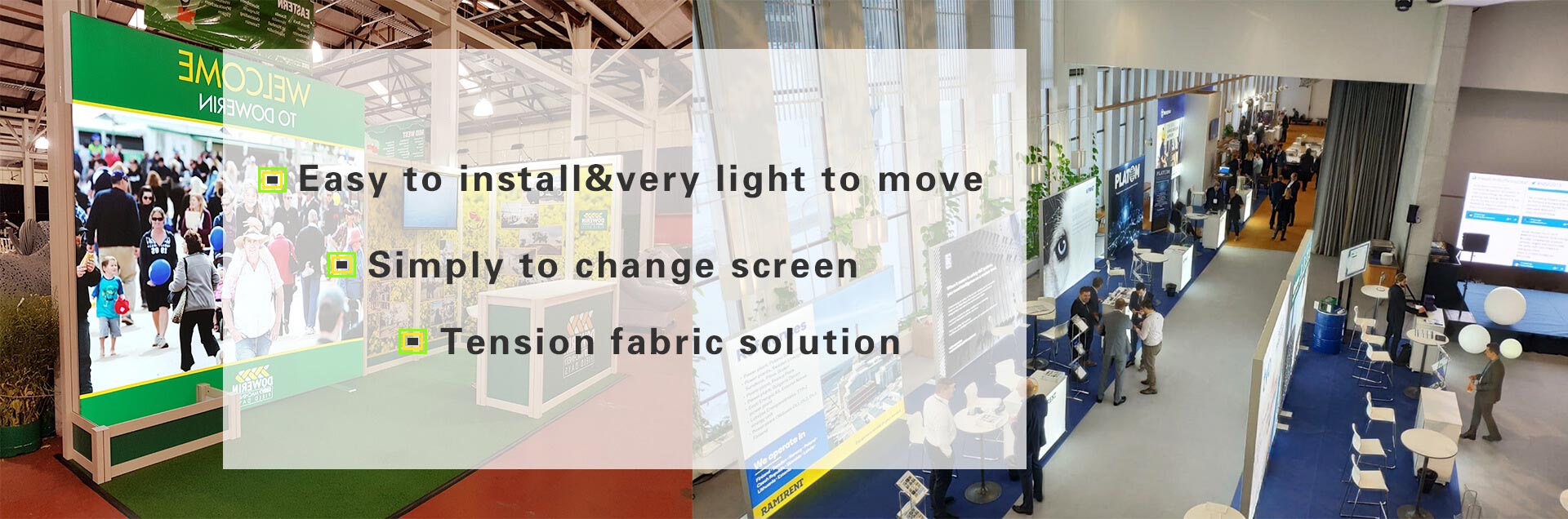
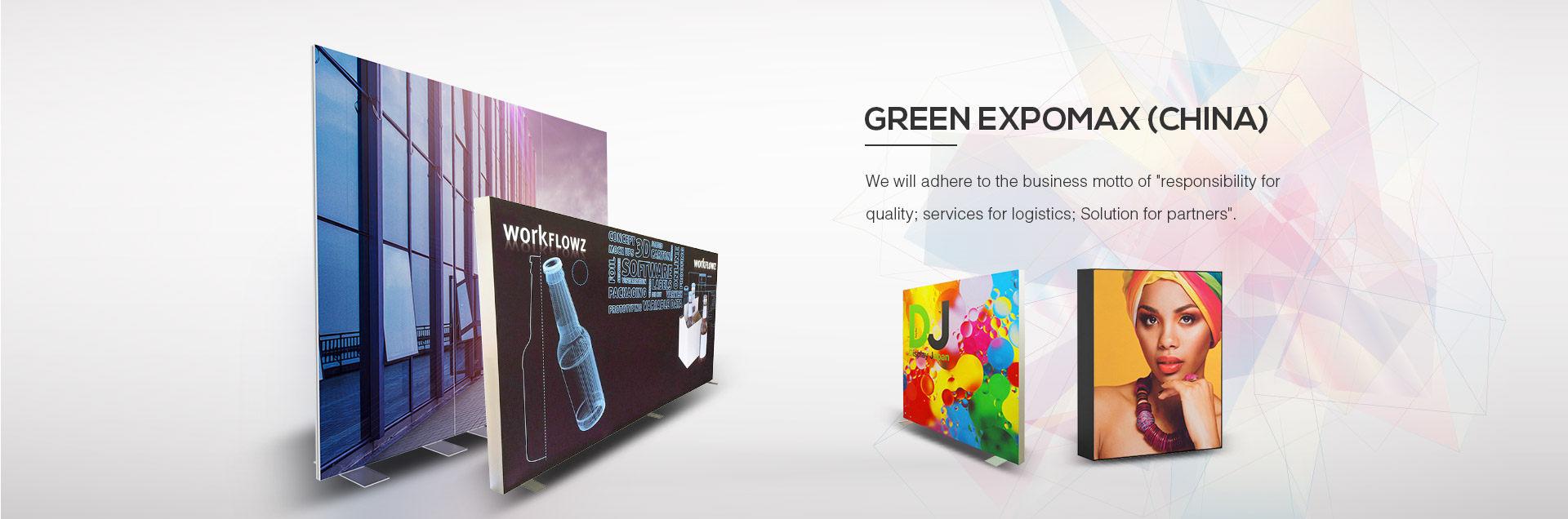
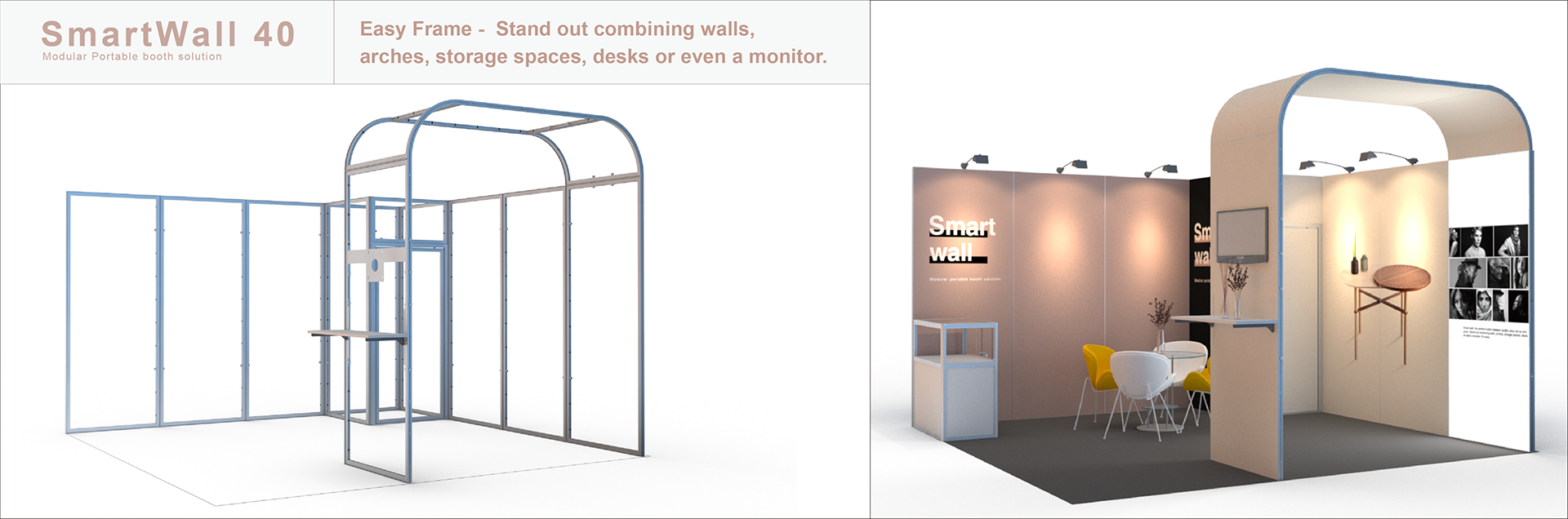
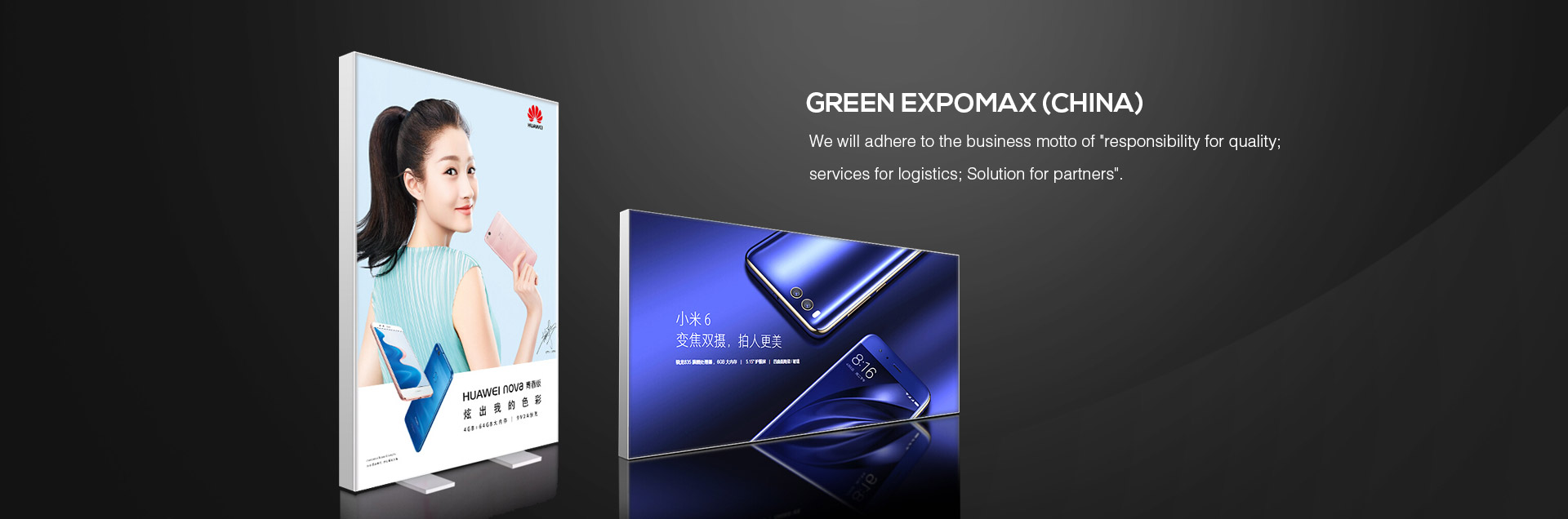
Green Expomax includes exhibit furniture among its product categories and also provides customized exhibition booth solutions incorporating reception counters, cabinets, display stands, locking storage, shelves, and other furniture elements.
| Purchasing factor | Reception Counter | Storage Counter | Display Counter |
|---|---|---|---|
| Main function | Visitor reception | Hidden storage | Product presentation |
| Visitor interaction | High | Medium | High |
| Storage | Limited to moderate | High | Usually limited |
| Product display | Limited | Limited | Strong |
| Typical position | Booth entrance/front | Rear/side | Product zone |
| Branding | High | Medium/high | High |
| Weight requirement | Moderate | Moderate/high | Depends on product |
| Security | Usually low | Can be lockable | Depends on design |
| Best for | Lead generation | Organized booth | Product demonstration |
The correct selection depends on what the counter needs to accomplish.
A reception counter is appropriate when the booth needs a clear point for greeting visitors, collecting information, handing out brochures, or beginning conversations.
It is especially useful when:
Staff need a defined reception position.
Lead collection takes place at the booth entrance.
The company wants a visible logo area.
Literature needs to be distributed.
The booth has limited floor space.
However, a reception counter should not block the visitor path.
Before selecting dimensions, map the booth entrance and the expected direction of visitor movement.
A counter placed directly in a narrow entrance can make the booth feel less accessible, even if the counter itself is well designed.
A storage counter becomes valuable when the booth needs to hide items that should remain accessible to staff.
Examples include:
Brochures
Product samples
Packaging
Bags
Staff belongings
Cleaning materials
Spare graphics
Small promotional items
Cables and accessories
The important purchasing parameter is not just external size.
Ask for the internal storage dimensions and check whether the doors, shelves, drawers, or locking mechanism meet the actual use case.
For example, a counter may look large externally but have limited internal capacity because of its structural frame.
A display counter is more appropriate when the product itself needs to be seen or handled.
It can be used for:
Electronics
Cosmetics
Small machinery
Samples
Packaging
Technical prototypes
Consumer products
Promotional merchandise
The buyer should specify the product's:
Weight
Dimensions
Center of gravity
Required viewing angle
Interaction method
Security requirements
A display counter designed for lightweight samples may not be suitable for a heavy industrial product.
Do not start with the counter itself. Start with the booth floor plan.
Check:
Booth width
Booth depth
Number of open sides
Entrance position
Visitor circulation
Product display area
Staff working area
Storage area
Then determine the maximum counter footprint that can be installed without restricting visitor movement.
A large counter may provide more storage but reduce usable floor area.
For a small booth, a compact multifunctional counter may be more practical than several individual furniture units.
Customization can be useful when the counter needs to integrate with the booth's visual identity or structural system.
For example, a custom counter may match:
SEG fabric graphics
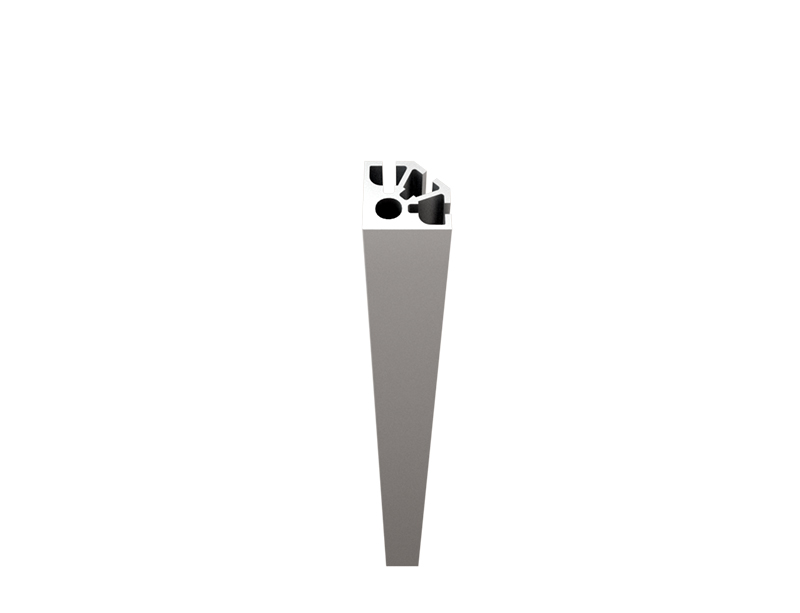
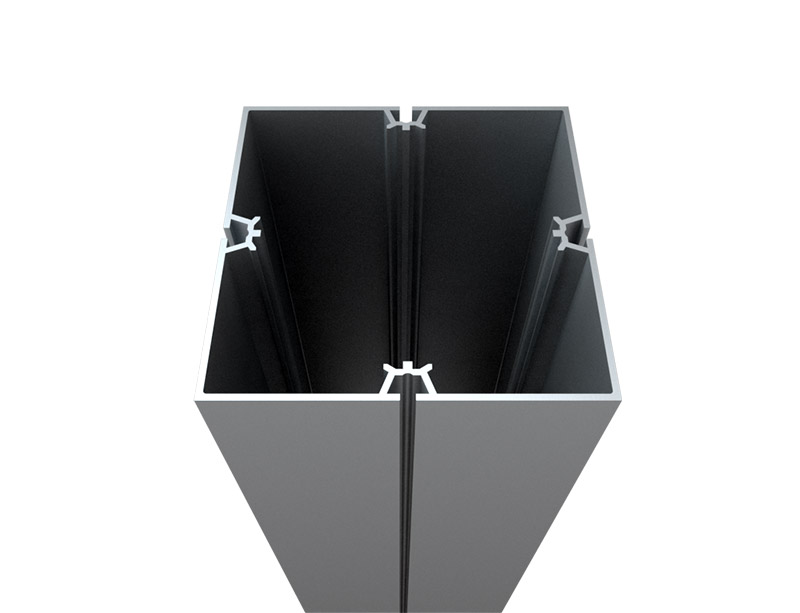
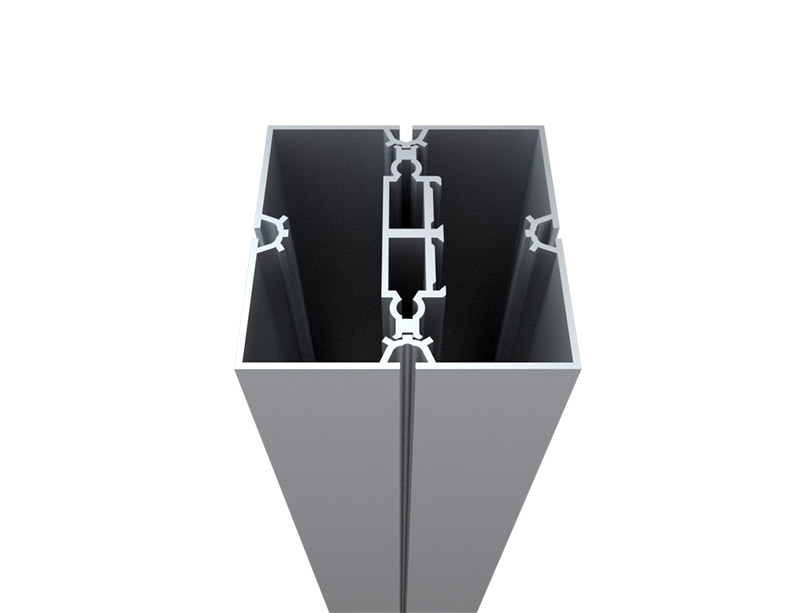
Aluminum extrusion
Backlit walls
Display cabinets
Shelving
Flooring
Brand colors
Logo placement
Green Expomax's customized booth solutions can include reception counters, locking storage cabinets, adjustable shelves, display stands, and other integrated furniture.
However, customization also creates a limitation: the counter may be less useful for future booth configurations if its dimensions are tied to one specific layout.
A modular counter is worth considering when the company attends multiple events with different booth footprints.
A modular approach can allow the buyer to change:
Graphic panels
Shelves
Countertop
Storage configuration
Position
Adjacent display components
This can improve reuse.
However, buyers should verify which components are actually interchangeable.
A counter described as “modular” may still depend on specific frame dimensions or proprietary connectors.
Common options include aluminum framing, MDF or plywood panels, PVC panels, laminate surfaces, acrylic, glass, and fabric graphics.
| Material/configuration | Suitable condition | Main limitation |
|---|---|---|
| Aluminum frame | Modular/reusable structures | Requires compatible panels/connectors |
| MDF/plywood | Solid furniture construction | More weight than lightweight frames |
| PVC panel | Lightweight display | Load/application limitations |
| Acrylic | Visual product display | Scratch/impact considerations |
| Glass | Premium product presentation | Weight and breakage risk |
| Fabric graphic | Large branding surfaces | Requires correct tension/attachment |
The selection should reflect product weight, transport conditions, expected reuse, and required appearance.
Green Expomax's customized booth cases list combinations such as aluminum extrusion frames, Sintra PVC panels, laminate plywood/MDF boards, high-gloss display cases, counters, cabinets, and adjustable shelves.
A counter should be specified according to the actual product weight rather than its appearance.
A tall or narrow counter can become unstable if its base dimensions are inadequate or heavy products are placed incorrectly.
A counter may look attractive but fail to accommodate the brochures, samples, or staff items required during the event.
Oversized or heavy counters can increase shipping and handling costs.
If the counter uses printed graphics, future replacement should be considered before the structure is finalized.
A counter that does not match the booth's frame, wall, flooring, or graphic system can make the booth look assembled from unrelated components.
A lockable counter is useful when staff need to leave items inside the booth temporarily.
Potential contents include:
Documents
Tablets
Promotional products
Samples
Personal belongings
Spare equipment
But a lock does not automatically make the counter suitable for high-value security requirements.
If expensive equipment must be secured, buyers should discuss the complete cabinet construction, locking mechanism, material, anchoring, and booth security plan.
Green Expomax's customized booth examples include locking storage cabinets as an available configuration.
There are several approaches:
Printed rigid panel
Useful when the counter needs a fixed graphic surface.
Fabric graphic
Can provide visual consistency with a fabric SEG booth.
Backlit counter
Can create a stronger visual effect but requires additional electrical planning.
Plain finish
May be suitable when the counter is primarily functional.
For reusable booths, replaceable graphics can be useful because the same counter can potentially support different campaigns.
The buyer should ask whether graphics can be replaced without changing the complete counter structure.
| Factor | Portable/modular counter | Fixed/custom counter |
|---|---|---|
| Transport | Usually easier | Can be more demanding |
| Reuse | High potential | Depends on design |
| Custom appearance | Moderate/high | High |
| Installation | Usually simpler | Can be more involved |
| Booth-specific fit | Moderate | Strong |
| Modification | Usually easier | Depends on construction |
| One-off event | Practical | May be excessive |
| Repeated events | Useful | Useful if layout is stable |
Again, neither format is universally appropriate.
The decision should follow the company's event schedule and transportation requirements.
A useful RFQ should specify:
Overall width
Depth
Height
Countertop height
Internal storage dimensions
Reception
Storage
Product display
Demonstration
Combination
Product weight
Countertop load
Shelf load
Equipment weight
Aluminum
MDF/plywood
PVC
Acrylic
Glass
Fabric
Logo
Printed graphic
Backlit graphic
Replaceable graphic
Packed dimensions
Weight
Packaging
Installation method
Destination
Event date
This information allows suppliers to quote comparable products.
Buying the counter together with the booth can simplify design coordination.
The supplier can check:
Frame compatibility
Graphic dimensions
Counter position
Flooring height
Lighting
Storage
Transportation packaging
However, separate sourcing may make sense if the buyer already has standardized furniture or wants to reuse existing counters across different exhibition systems.
The key is to define the interface between the booth and furniture.
Ask for more than catalog photographs.
Verify whether the supplier can provide:
Dimension drawings
Material specifications
Load information
Sample production
Graphic replacement
Customized sizes
OEM branding
Packaging
Assembly instructions
Replacement components
Green Expomax states that it supports OEM services and customized exhibition solutions, while its product portfolio includes exhibition furniture and other event fittings. The company also reports approximately 15 years of exhibition-product experience and a 3,000 m² production facility.
For customized counters, sample approval is particularly useful.
Check:
Overall dimensions
Stability
Countertop finish
Storage capacity
Door/drawer operation
Lock function
Graphic installation
Product load
Packing method
Assembly and dismantling
Green Expomax states that customized products are not accepted for return after orders are placed following sample confirmation, which makes pre-production specification and sample approval particularly important for customized orders.
A reception counter is primarily designed for visitor interaction, lead collection, and staff use, while a display counter is designed to present products or samples. A booth may use both if it has enough floor space and separate visitor and product-display zones.
Start with the booth floor plan and visitor circulation rather than choosing a counter by appearance. Confirm the counter footprint, staff working area, storage needs, and product load before finalizing the dimensions.
Storage is useful when staff need to keep brochures, samples, personal belongings, cables, or packaging inside the booth. If storage is required, specify the internal dimensions and whether shelves, drawers, or locking doors are needed.
Yes, a counter can be designed to visually coordinate with an SEG booth, although the exact graphic attachment method depends on the counter construction. Buyers should confirm the frame, graphic dimensions, and replacement method before production.
Yes. Green Expomax's customized booth solutions can include reception counters, cabinets, locking storage, adjustable shelves, display stands, and other booth furniture. The company also offers customized exhibition products and OEM services.
The most important decision is the function of the counter within the visitor flow.
Choose a reception counter when interaction and lead collection are the priority. Choose a storage counter when concealed capacity is more important. Choose a display counter when the product itself needs to be presented or demonstrated.
For repeated exhibitions, prioritize modular construction and replaceable graphics. For a highly customized one-time booth, a fixed counter may provide greater design integration.
Before approving the order, request dimension drawings, material information, load requirements, graphic specifications, packed dimensions, and a sample for customized products. This gives the procurement team a clearer basis for comparing suppliers and reduces the risk of receiving furniture that looks suitable in a catalog but does not work within the actual booth.
Previous: None
Next: Who We Are


Copyright © Green Expomax (China) Exhibition Equipments Co.,Ltd. All Rights Reserved | Sitemap |