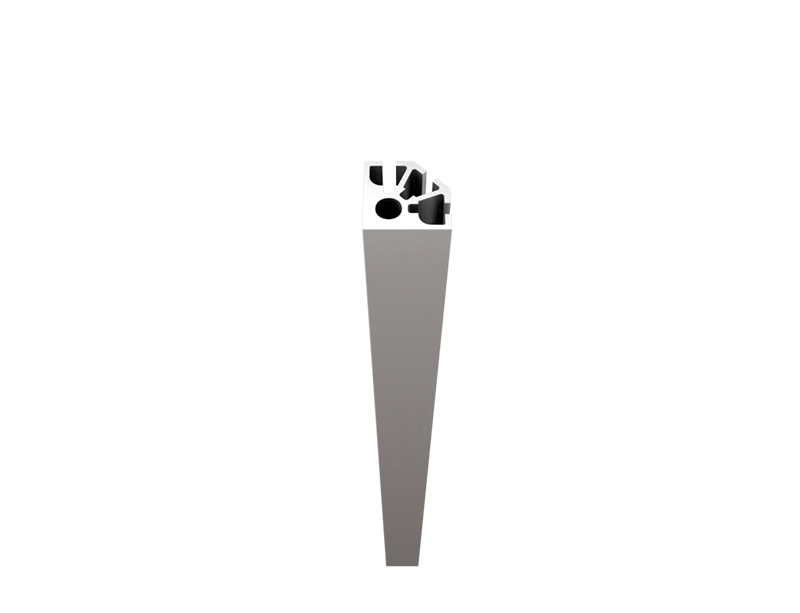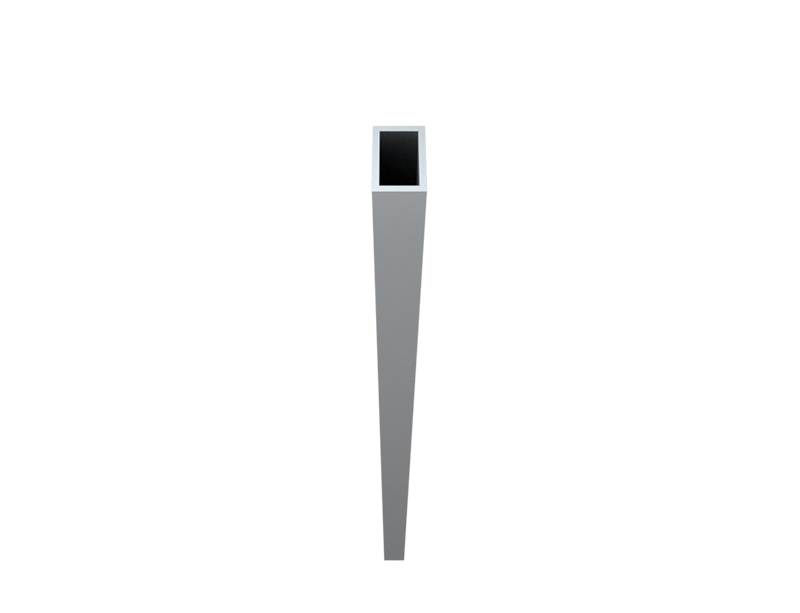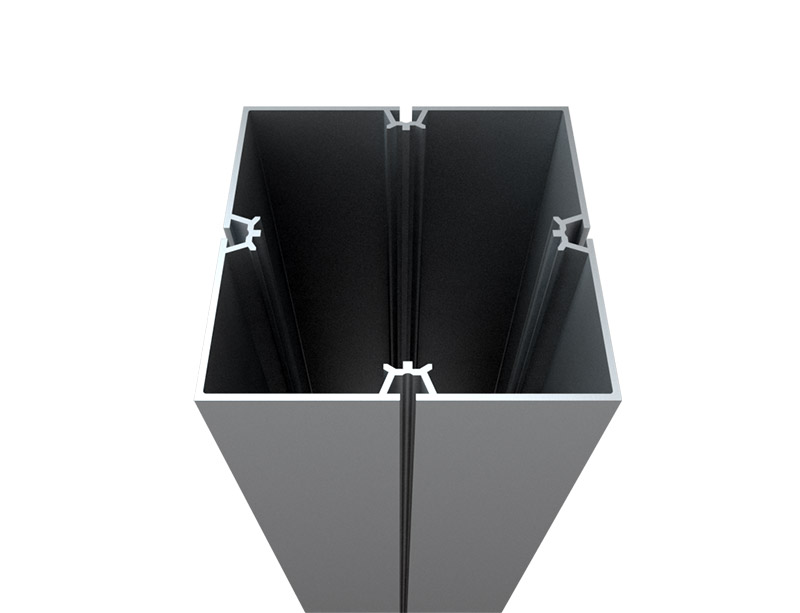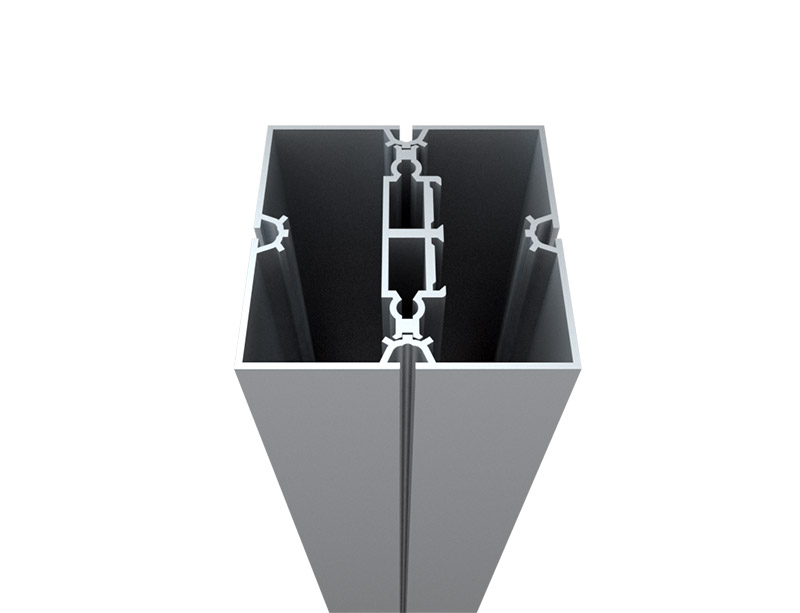


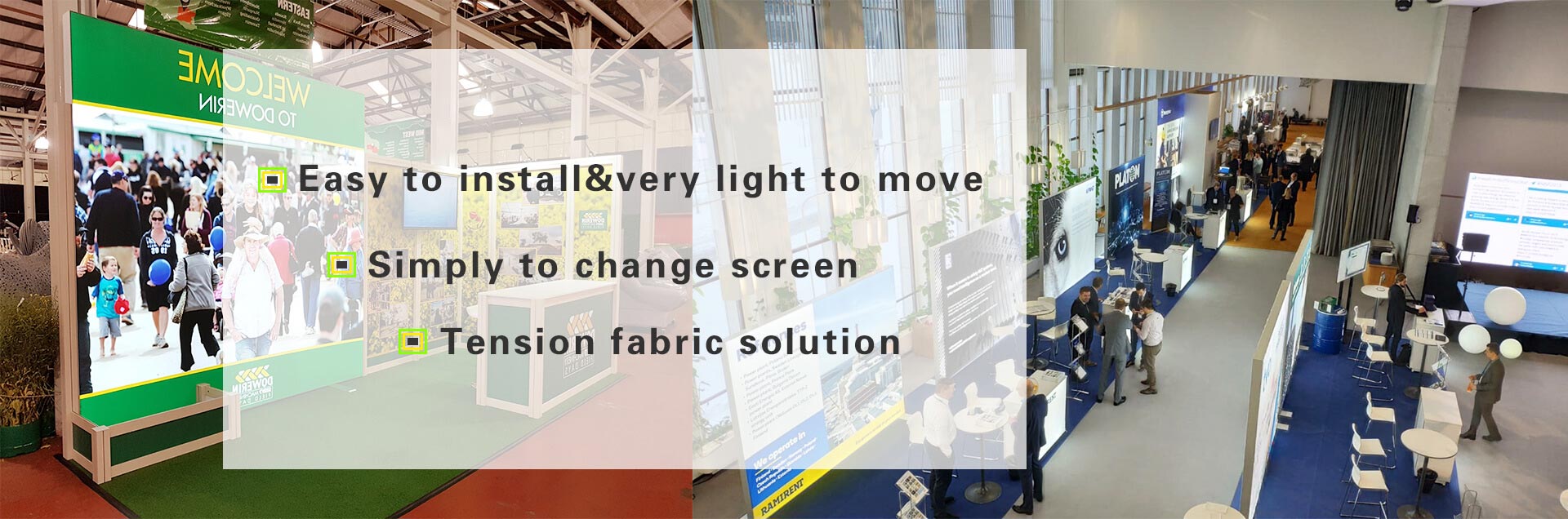
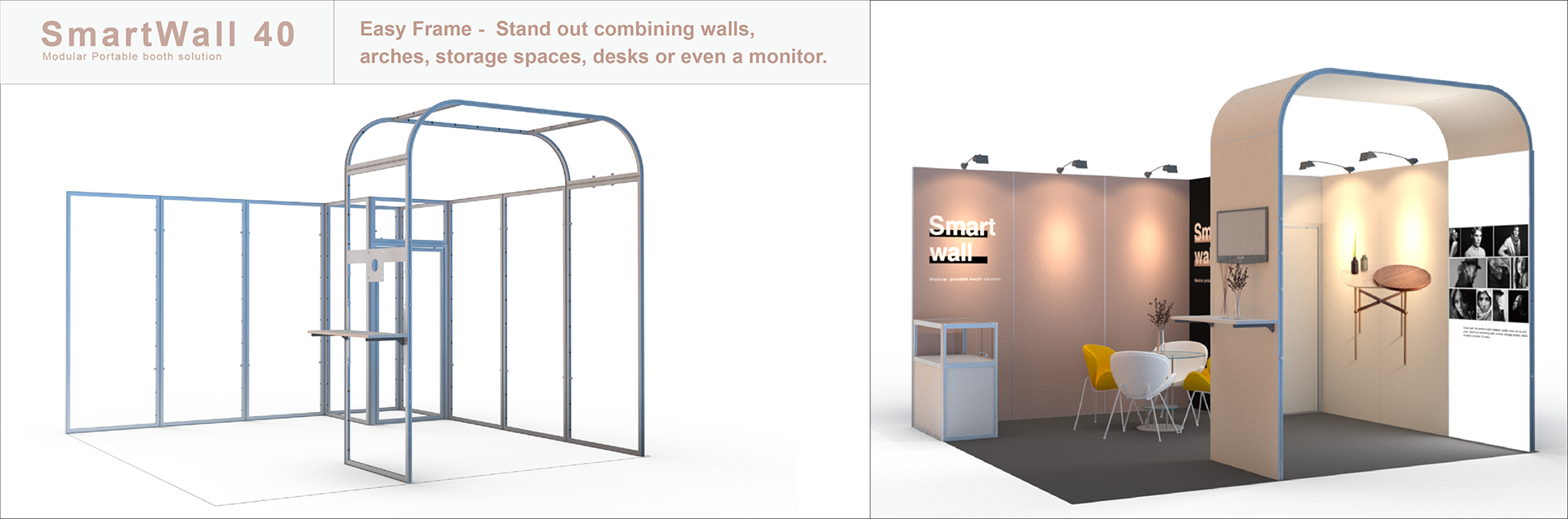
When Choosing 40mm vs 80mm Aluminum Profiles for Booth Structures, I compare five practical factors: profile dimensions, unsupported span, supported load, booth height, and transport requirements. In general, 40mm profiles suit lightweight portable booth frames, while 80mm profiles suit longer spans, taller structures, heavier signage, monitors, shelving, and overhead loads. The correct choice is usually based on the critical load paths rather than the use of one profile size throughout the entire exhibit.
!
Before selecting aluminum extrusion profiles for trade show booths, I collect the booth footprint, finished height, longest unsupported beam, attached equipment, graphic system, and expected reuse cycle. A 3m × 3m portable display with fabric graphics has different structural requirements from a 6m × 6m custom booth with overhead signage and multiple monitors.
I also identify how the frame will be transported and assembled. Profile size affects the mass of each beam, the number of people needed for installation, packing volume, and the likelihood that components can be reused across different event layouts.
The following information should be available before making a final selection:
I use the following five rules as an initial selection method:
This process gives me a useful preliminary direction, but it does not replace a project-specific engineering review. Connector strength, base stability, bracing, anchoring, and the actual profile wall thickness can change the result significantly.
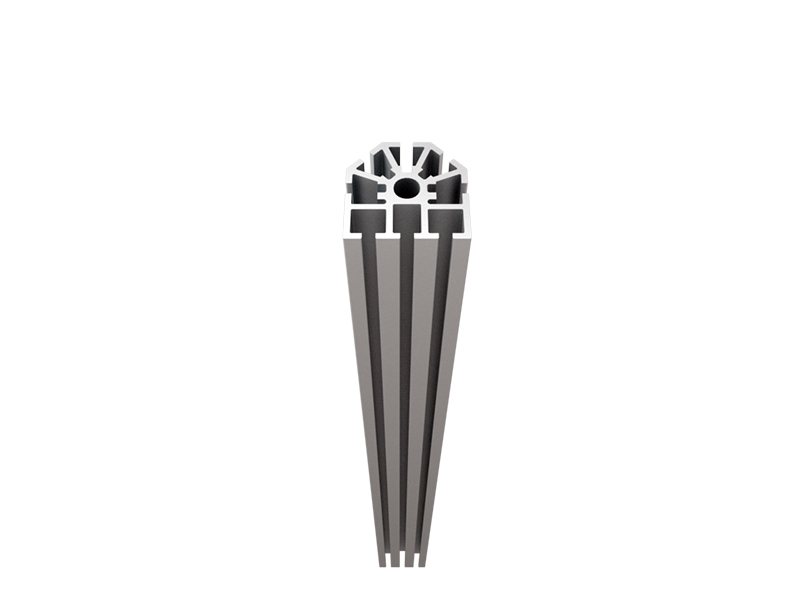
The basic difference between 40mm and 80mm aluminum profiles is the outside dimension of the extrusion. A common 40-series profile is 40mm × 40mm, while an 80-series member may be 80mm × 80mm or an 80mm × 40mm configuration, depending on the extrusion system.
A 40mm × 40mm profile has a smaller structural depth in both directions. An 80mm × 80mm profile has approximately twice the outside depth, although its actual mass and internal geometry depend on wall thickness, cavity design, alloy, and manufacturer specifications.
For rectangular sections, orientation is important. A 40mm × 80mm profile is much stiffer when the 80mm dimension is positioned vertically against bending than when the same member is rotated so that the 40mm dimension is vertical.
| Profile configuration | Typical booth role | Main structural characteristic |
|---|---|---|
| 40mm × 40mm | Backwalls, small uprights, graphic frames | Low mass and easy handling |
| 40mm × 80mm | Medium beams, monitor rails, reinforced uprights | Increased stiffness in one direction |
| 80mm × 80mm | Long beams, tall posts, large custom structures | Greater structural depth in both directions |
| 80mm × 40mm | Directional reinforcement or equipment supports | Useful when bending occurs mainly in one plane |
I never specify a profile based on nominal size alone. Two profiles with the same external dimensions may have different cross-sectional areas, moments of inertia, wall thicknesses, and allowable loads.
The aluminum extrusion booth frame load capacity depends on more than the material’s tensile strength. For booth structures, the critical issues are often beam deflection, connection movement, local deformation around fasteners, and overturning at the base.
For a simply supported beam under a central point load, the approximate deflection relationship is:
[ \delta = \frac{PL^3}{48EI} ]
Here, P represents the applied load, L is the unsupported span, E is the elastic modulus of aluminum, and I is the section’s moment of inertia. The cubic relationship with span means that doubling the span can increase deflection by roughly eight times when the other variables remain unchanged.
This is why an 80mm profile can be useful even when the attached equipment is not extremely heavy. Its greater structural depth can produce a substantially higher moment of inertia than a comparable 40mm profile, reducing visible sag across a long header or monitor beam.
For practical booth design, I evaluate the following load categories:
A manufacturer’s load chart should specify span, support condition, load position, allowable deflection, and safety factor. Without those values, it is not technically responsible to state that a 40mm profile supports a fixed number of kilograms in every booth design.
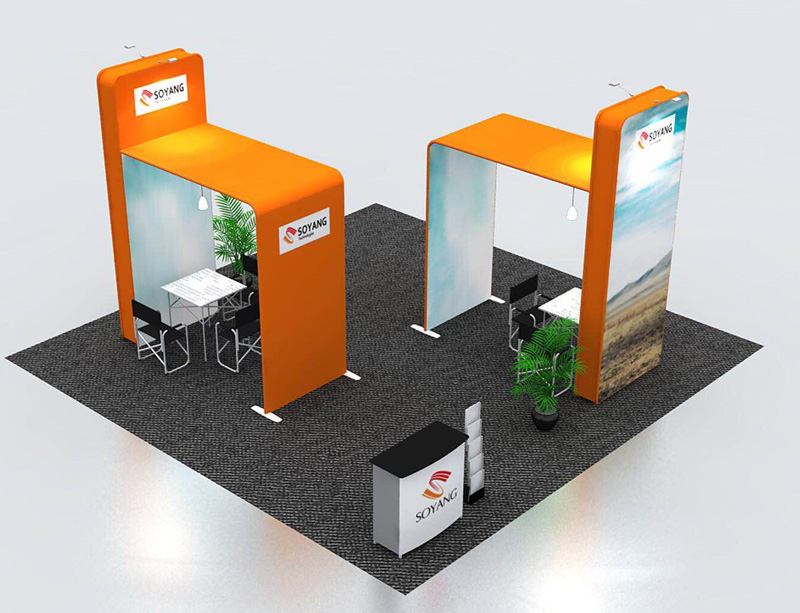
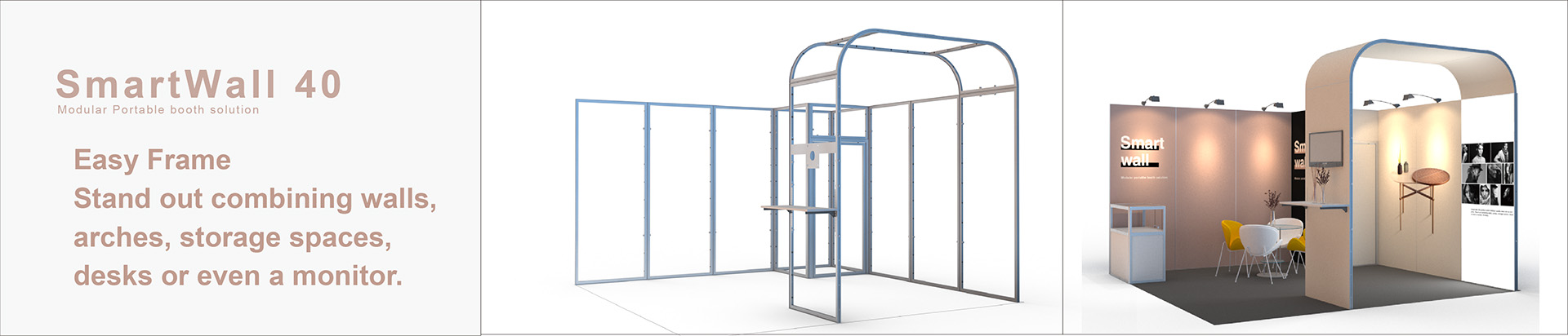
I commonly use 40mm aluminum profiles for trade show booths when the structure prioritizes portability, rapid assembly, and moderate graphic loads. They are suitable for many 3m × 3m and 3m × 6m display configurations, provided that spans remain controlled and heavy equipment is independently supported.
Typical applications include:
A 40mm × 40mm profile can be effective for a 2.5m-high or 3m-high fabric wall when the wall is divided into manageable bays and supported by stable feet. I avoid using it as a single long header when the beam must carry a concentrated monitor or sign load.
The main operational benefit is lower handling weight. As a planning estimate, a 40mm system may reduce aluminum frame mass by approximately 20% to 45% compared with an 80mm system for a similar layout, but the exact difference depends on profile wall thickness, length, connectors, and accessory count.
The limitation is reduced structural reserve. Long unsupported beams, tall narrow uprights, cantilevered shelves, and point-loaded monitor brackets can create visible movement even when the overall booth weight is modest.
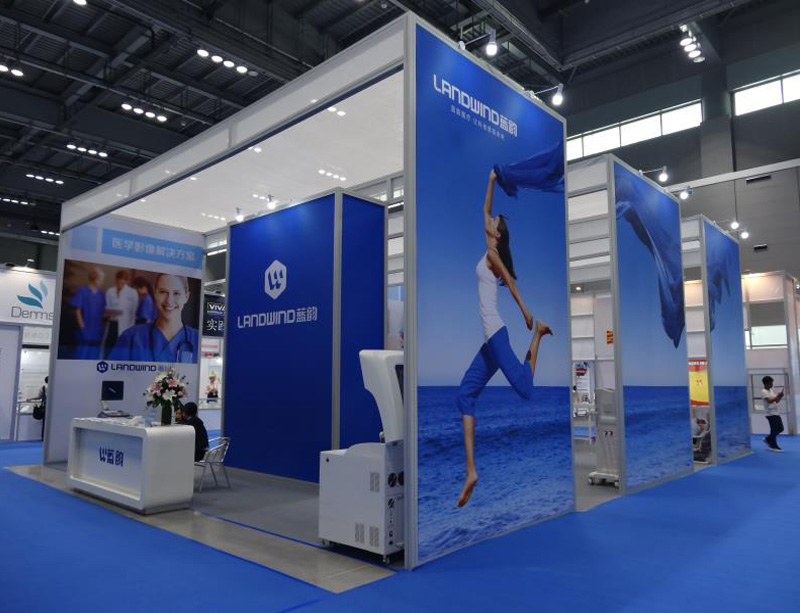
I select 80mm aluminum profiles for large booth structures when span, height, equipment, or public-access stability becomes more important than minimum transport weight. The larger section is particularly useful for long headers, tall freestanding towers, large overhead signs, and beams carrying multiple fixtures.
Typical applications include:
An 80mm × 80mm profile is not automatically required for every member in a large booth. In many designs, I use 80mm profiles for the primary columns and long beams, then use 40mm profiles for secondary graphic frames, infill supports, shelves, and trim.
This approach can reduce unnecessary weight while preserving stiffness where it matters. Depending on the layout, hybrid construction may reduce the aluminum quantity in secondary framing by approximately 15% to 35% compared with building the entire booth from 80mm members.
The disadvantages are higher material cost, heavier cases, greater shipping weight, and more demanding assembly. For a booth that must be installed by a small team, the handling difference between a long 40mm beam and a long 80mm beam can affect labor planning and installation time.
Profile orientation is a separate design factor from profile size. If a rectangular 40mm × 80mm aluminum extrusion carries bending primarily in one plane, I place the 80mm dimension perpendicular to that bending direction. Rotating the same profile can reduce its effective stiffness and increase deflection.
The connector system also affects the final behavior of the booth. A large extrusion connected with undersized fasteners, shallow engagement, or flexible brackets may perform worse than a smaller extrusion with properly designed joints.
I review these components together:
A booth can fail as an operating structure through joint rotation or base movement before the aluminum itself reaches its material limit. For that reason, I treat joints, feet, bracing, and anchoring as part of the structural system rather than as secondary accessories.
The following matrix provides a preliminary direction for common exhibition conditions. The values are selection ranges, not universal load approvals; final limits must come from the exact extrusion and connector supplier.
| Booth condition | Preferred starting point | Reason |
|---|---|---|
| 3m × 3m fabric backwall | 40mm × 40mm | Short bays, low graphic load, easy transport |
| 3m × 6m backwall with divided panels | 40mm × 40mm or 40mm × 80mm | Depends on bay width and feet spacing |
| Long header above open aisle | 40mm × 80mm or 80mm × 80mm | Improved stiffness and reduced visual sag |
| Single lightweight monitor | 40mm × 80mm with reinforced bracket | Point load requires local reinforcement |
| Multiple monitors on one beam | 80mm primary beam | Higher bending and connection demand |
| Tall freestanding tower | 80mm uprights or braced 40mm system | Height increases sway and overturning risk |
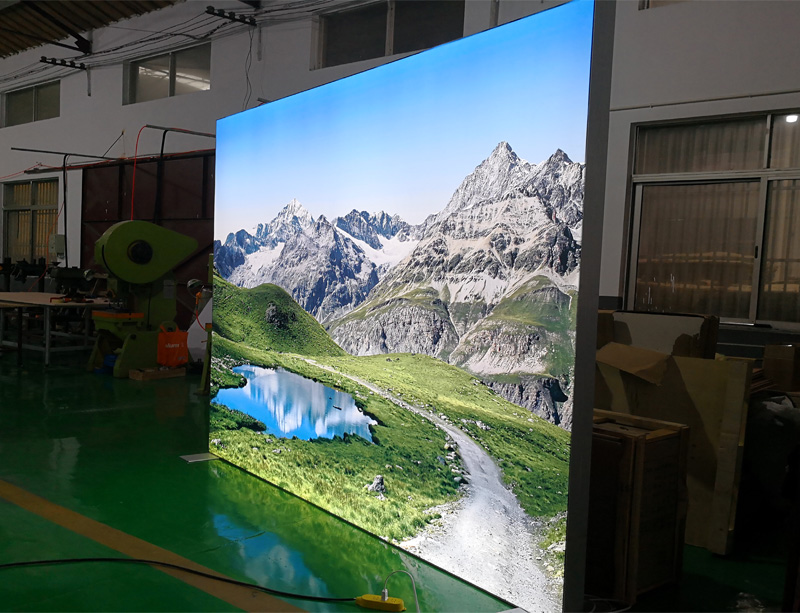
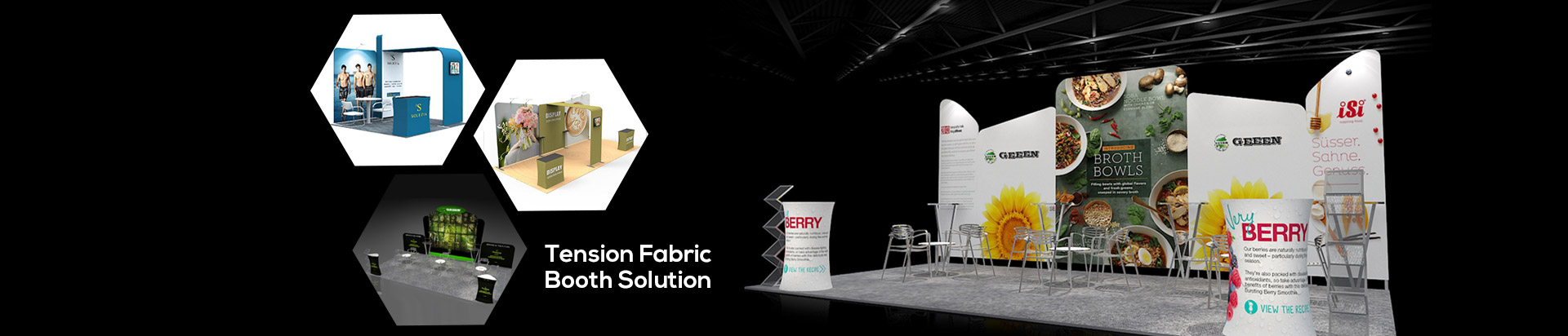
| Backlit SEG wall | 40mm system for short bays | Suitable when LED and fabric loads remain low |
| Large overhead sign | 80mm or engineered suspended system | Requires venue approval and load review |
| Portable reusable display | 40mm or hybrid system | Lower case weight and simpler handling |
| Heavy shelving or product display | 40mm × 80mm or 80mm | Depends on shelf span and point loads |
Aluminum profiles form a modular frame through T-slot channels, connectors, feet, brackets, and infill materials. The extrusion carries vertical and horizontal forces, while the joints transfer those forces between members and into the floor.
Graphic panels and SEG fabrics can contribute some lateral stability, but I do not assume that a fabric skin alone provides adequate bracing. A tall booth may require rigid back panels, diagonal members, wider feet, or anchoring to control racking and overturning.
In an exhibition environment, the structure also carries operational loads that are easy to miss during initial planning. Visitors may touch or lean against walls, staff may hang accessories from profiles, and technicians may install monitors or lighting after the frame is assembled.
For a custom aluminum booth construction project, I therefore separate the design into primary structure, secondary framing, graphic support, equipment mounting, and base stabilization. This makes it easier to use 80mm profiles only where calculations or field conditions justify them.
The choice between 40mm and 80mm profiles affects total cost of ownership, not only the purchase price of the extrusion. Larger profiles generally cost more per linear meter and may require heavier connectors, larger cases, stronger feet, and additional handling equipment.
For budgeting, I compare these cost categories:
| Cost factor | 40mm profile tendency | 80mm profile tendency |
|---|---|---|
| Extrusion purchase | Lower per linear meter | Higher per linear meter |
| Shipping weight | Lower | Higher |
| Packing volume | Smaller cases possible | Larger cases often required |
| Assembly labor | Lower handling demand | More lifting and alignment effort |
| Reuse flexibility | Strong for portable layouts | Strong for fixed primary frames |
| Structural reserve | Lower | Higher |
| Risk of later reinforcement | Higher on long spans | Lower when correctly specified |
As an example, a hybrid booth may use 80mm members for four main uprights and two long headers, while 40mm profiles handle graphic borders and short infill sections. If that arrangement reduces total aluminum mass by 25% compared with an all-80mm frame, the savings can affect freight, storage, and crew requirements over multiple events.
I also account for reuse. A 40mm system may be easier to reconfigure into smaller booths, while 80mm primary members can retain value for large repeat layouts. The best financial decision depends on the number of events, storage conditions, shipping distance, and whether the same heavy equipment will be installed repeatedly.
I do not treat a profile comparison as approval for suspended loads or public-access structures. Hanging signs, overhead frames, large cantilevers, and structures positioned near visitors should be checked by a qualified engineer and approved according to the venue’s rules.
The venue may impose separate limits for maximum height, fire-rated materials, emergency access, floor loading, hanging points, and seismic or wind exposure. These requirements can override a preliminary choice between 40mm and 80mm profiles.
Before production, I request the following technical information:
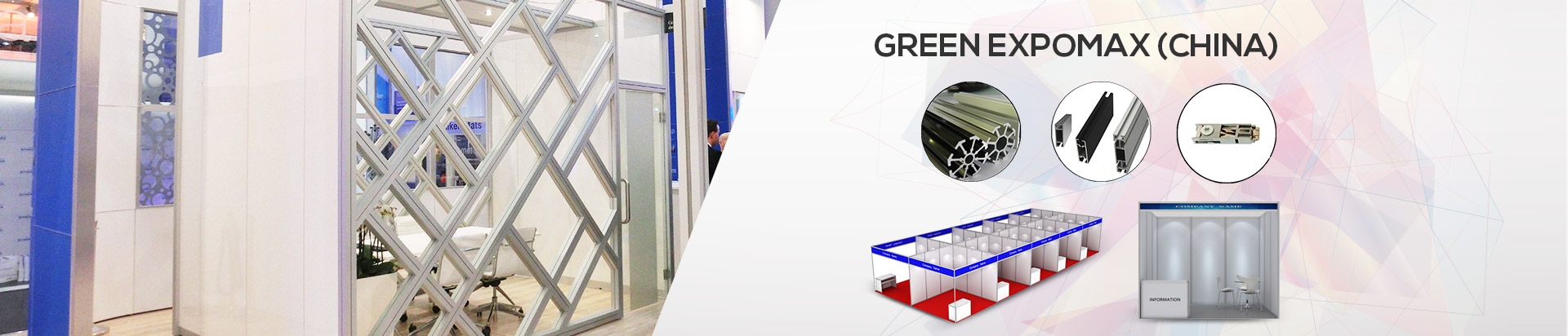
Green Expomax is an exhibition and event equipment manufacturer based in Changzhou, China, with a stated 3,000m² factory and export experience across more than 40 countries. Its product range includes modular exhibition systems, 8-way extrusion, Maxima extrusion, SEG systems, backlit displays, booth kits, event stages, and exhibition walls, making it a relevant reference point when comparing aluminum framing options for trade-show applications.
Oversizing every member is one of the most common mistakes. It increases weight and cost without improving parts of the booth that carry only graphics or trim, so I reserve larger profiles for long spans, tall posts, concentrated loads, and overhead elements.
Choosing by weight alone can also produce an incorrect result. A 20kg monitor mounted at the center of a long beam may create more deflection than a much heavier distributed fabric wall.
Ignoring orientation reduces the benefit of rectangular profiles. A 40mm × 80mm member must be placed with its deeper dimension working against the main bending direction.
Using weak connections with large profiles creates a false sense of security. I verify fasteners, brackets, feet, braces, and base plates as a complete load path.
Treating a graphic wall as structural bracing can create instability during assembly or public use. Fabric and panel systems should be evaluated for their actual contribution to lateral stiffness rather than assumed to stabilize the frame.
When I make the final recommendation, I document the following items in the booth drawing or technical schedule:
For a small booth with short spans and fabric graphics, 40mm Aluminum Extrusion usually provides the required balance of stiffness, portability, and assembly efficiency. For large structures, long beams, tall uprights, heavy signage, or multiple monitor supports, 80mm profiles provide greater structural reserve and lower deflection risk when correctly connected.
In conclusion, Choosing 40mm vs 80mm Aluminum Profiles for Booth Structures should focus on the critical load paths rather than profile size alone. I recommend 40mm for lightweight portable framing, 80mm for long-span and high-load members, and a hybrid system when only selected parts need additional stiffness. The final decision should be confirmed using the exact profile data, connector ratings, booth dimensions, equipment loads, reuse plan, and venue regulations.


Copyright © Green Expomax (China) Exhibition Equipments Co.,Ltd. All Rights Reserved | Sitemap |